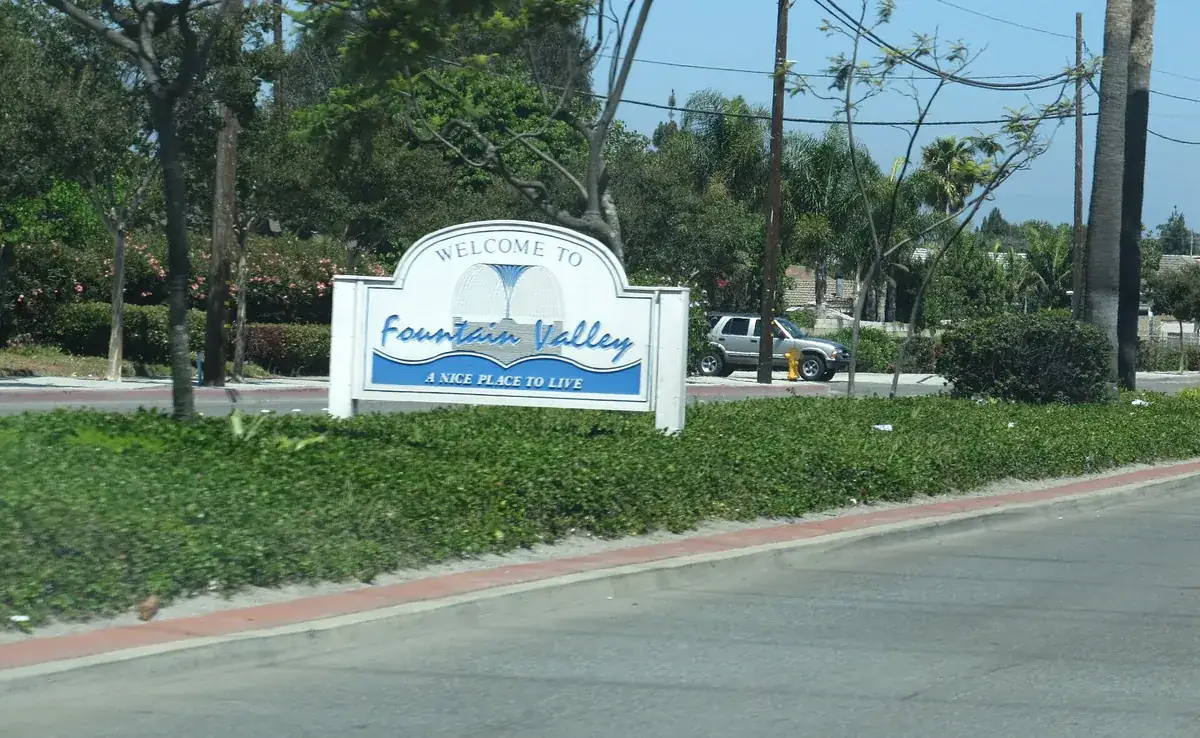
Fountain Valley: Consistent Stock, Repeating Problems
Fountain Valley is a suburban city in Orange County with 57,047 residents at the 2020 Census, and it is the most homogeneous housing market on this service list. Where Costa Mesa spans six decades of construction types and Huntington Beach mixes tract housing with a waterfront, Fountain Valley is overwhelmingly detached single-family housing built to a consistent standard.
For a cabinet maker that consistency is a genuine advantage. The same three problems recur: kitchens laid out for an appliance set that no longer exists at those dimensions, base cabinets that are doors and shelves where they should be drawers, and a blind corner with nothing in it. Each has a known answer, and none of them requires a structural investigation to diagnose.
The city borders Huntington Beach directly on its north-east side, which is why it is treated as core service area here rather than as an outlying extra.
The Drawer Problem, Which Is This City's Defining One
A base cabinet with a door and one shelf wastes the back third of its depth, because reaching that third means kneeling and moving everything in front of it. That is the single most common complaint in the kitchens here, and it is also the most satisfying to fix, because a drawer base presents the whole depth at once.
Drawers cost more per linear foot than doors, since there is more hardware and more joinery in them, so the sensible approach is to buy them where they earn their keep rather than everywhere. In practice that means a full bank either side of the range, one deep pair for pots and pans, and doors kept for the bulky, infrequent items.
| Position | Door and shelf | Drawer bank | Worth the upgrade? |
|---|---|---|---|
| Either side of the range | Back third unreachable while cooking | Whole depth presented at once | Yes, first priority |
| Under the sink | Needed, because of the plumbing | Not usually possible | No, keep as a door |
| Pot and pan storage | Stacking, lifting, and noise | Deep drawer, single lift | Yes |
| Bulky infrequent items | Perfectly adequate | Expensive for the benefit | No |
| Blind corner | Dead volume behind a fixed panel | A mechanism, or a redesign | Yes, but the answer is not a drawer |
The Appliance Problem
Kitchens built for a 1970s appliance list were drawn around a 30 inch range, a shallow refrigerator and, frequently, no dishwasher at all. Modern counter-depth refrigerators, 36 inch ranges, hood inserts and integrated dishwashers do not fit those openings, and each substitution eats into the cabinet run on both sides.
The practical consequence is that the run length people measure today is often shorter than the one the builder installed, and that the remaining cabinets are in awkward widths. Fixed-width stock cabinets handle that badly, because the leftover dimensions are not multiples of three inches. This is the specific mechanism by which built-to-measure cabinetry pays for itself in this housing stock. The tier comparison guide works through where the line falls.
Services in Fountain Valley
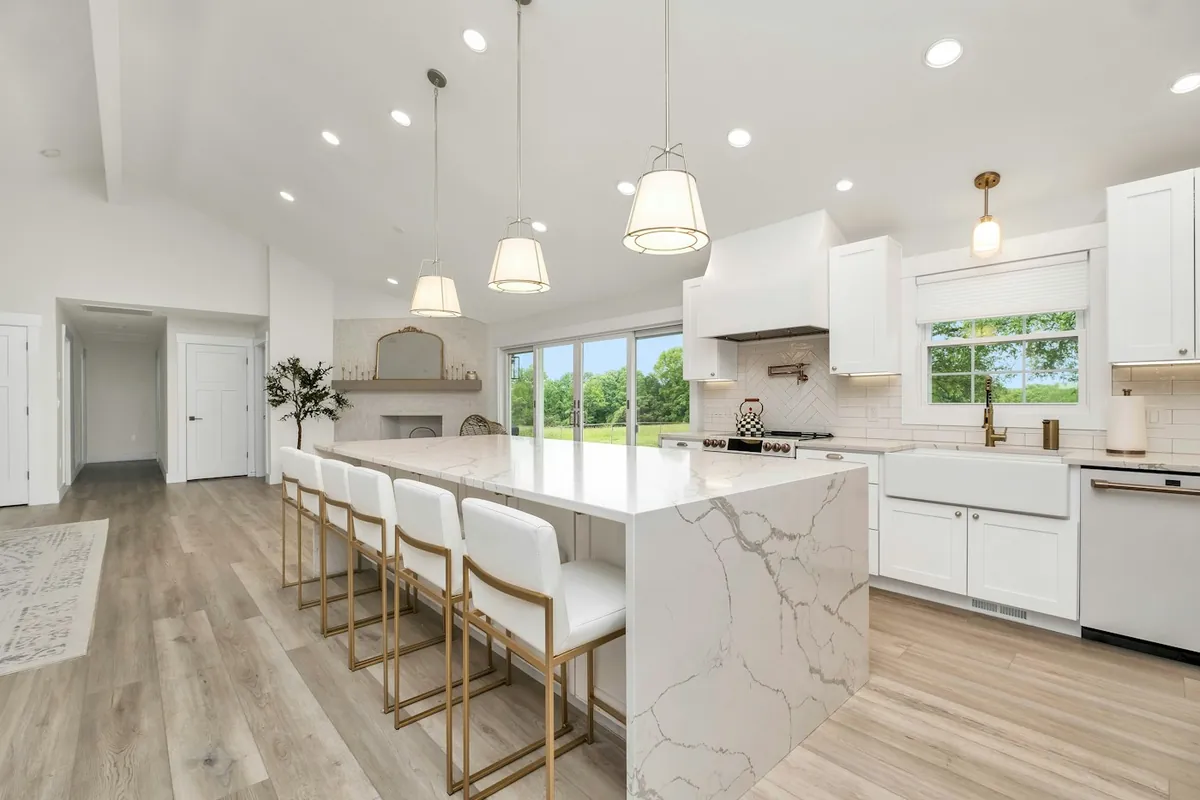
Every service on this site runs here. The ones that come up most in this city are full kitchen replacement, islands where a wall has come out between the kitchen and the family room, and garage storage, which in a city of detached houses with attached garages is a much bigger category than it sounds.
What It Costs Here
Nothing about Fountain Valley changes the published rates, because published cabinet rates are regional rather than municipal. The Los Angeles area band of $500 to $1,500 per linear foot for custom cabinetry is the nearest printed benchmark to Orange County, and the national installed bands apply as everywhere else.
| Figure | Value | Source scope |
|---|---|---|
| Custom cabinetry, per linear foot | $500 to $1,500 | Published Los Angeles area range |
| Stock, installed per linear foot | $75 to $400 and up | National |
| Semi-custom, installed per linear foot | $150 to $900 and up | National |
| Custom, installed per linear foot | $500 to $1,400 and up | National |
| Installer labour | $50 to $70 per linear foot | National |
| Laminate refacing, 12 cabinets | $1,576 to $2,482 | Published Huntington Beach estimate |
Figures read at source on 30 September 2026. No Fountain Valley specific published cabinet figure exists, so none is invented here; the nearest genuinely local figures are the Huntington Beach ones.
What does vary here is the run length rather than the rate, and because the housing stock is consistent, run lengths cluster more tightly than they do in a mixed city. The cost guide sets out every published figure and the 10 by 10 worked example shows how to convert a tape measurement into a number.
Permits, Licensing and Finishing Rules
The permit exemption for cabinets is in the California Residential Code and is statewide, so it reads identically in Fountain Valley and in Huntington Beach. Plumbing, gas and electrical work are not exempt anywhere, and in Fountain Valley they go through the city's own building department.
Licensing is statewide too: a California C-6 licence covers Cabinet, Millwork and Finish Carpentry, and the CSLB Check a License page verifies a number in about ninety seconds. The statutory deposit cap of $1,000 or 10 percent of the contract, whichever is less, applies here as everywhere in California.
Fountain Valley is inside the South Coast Air Quality Management District, whose jurisdiction covers Los Angeles, Orange, Riverside and San Bernardino counties, so the same coating limits apply: 275 grams of volatile organic compounds per litre for clear and pigmented topcoats under Rule 1136 in a shop, and the same 275 for wood coatings, varnish, sanding sealers and lacquer under Rule 1113 on site.
| Rule and where it applies | Category | Limit in g/L |
|---|---|---|
| Rule 1136, shop applied | Clear and pigmented primers, sealers, undercoats and topcoats | 275 |
| Rule 1136, shop applied | Fillers and other coatings | 275 |
| Rule 1136, shop applied | High-solids stains and japans | 350 |
| Rule 1136, shop applied | Low-solids stains, toners and washcoats | 120, per litre of material |
| Rule 1136, shop applied | Strippers | 350, with a 2 mmHg vapour pressure limit at 20 C |
| Rule 1113, applied on site | Wood coatings, varnish, sanding sealers, lacquer | 275, with no small container exemption |
| Rule 1113, applied on site | Interior stains | 250 |
| Rule 1113, applied on site | Wood conditioners, primers, sealers and undercoaters | 100 |
Sources: South Coast AQMD Rule 1136, Wood Products Coatings, adopted 16 September 1983 and amended 5 June 2026, and Rule 1113, Architectural Coatings, amended 5 February 2016. Both read at source 30 September 2026. Rule 1136's definition of wood products expressly includes cabinets for the kitchen, bath and vanity, and the rule states it does not apply to residential non-commercial operations.
Two details in that table change how quotes compare. The four wood categories under Rule 1113 carry no small container exemption while most other categories in the same table do, so a small tin or an aerosol touch-up can is not exempted by being small. And Rule 1136 allows an alternative compliance route, in which a facility may instead use an approved air pollution control system reducing VOC emissions by an equivalent or greater amount than the specified limits, which is one reason larger shops sometimes finish differently from small ones.
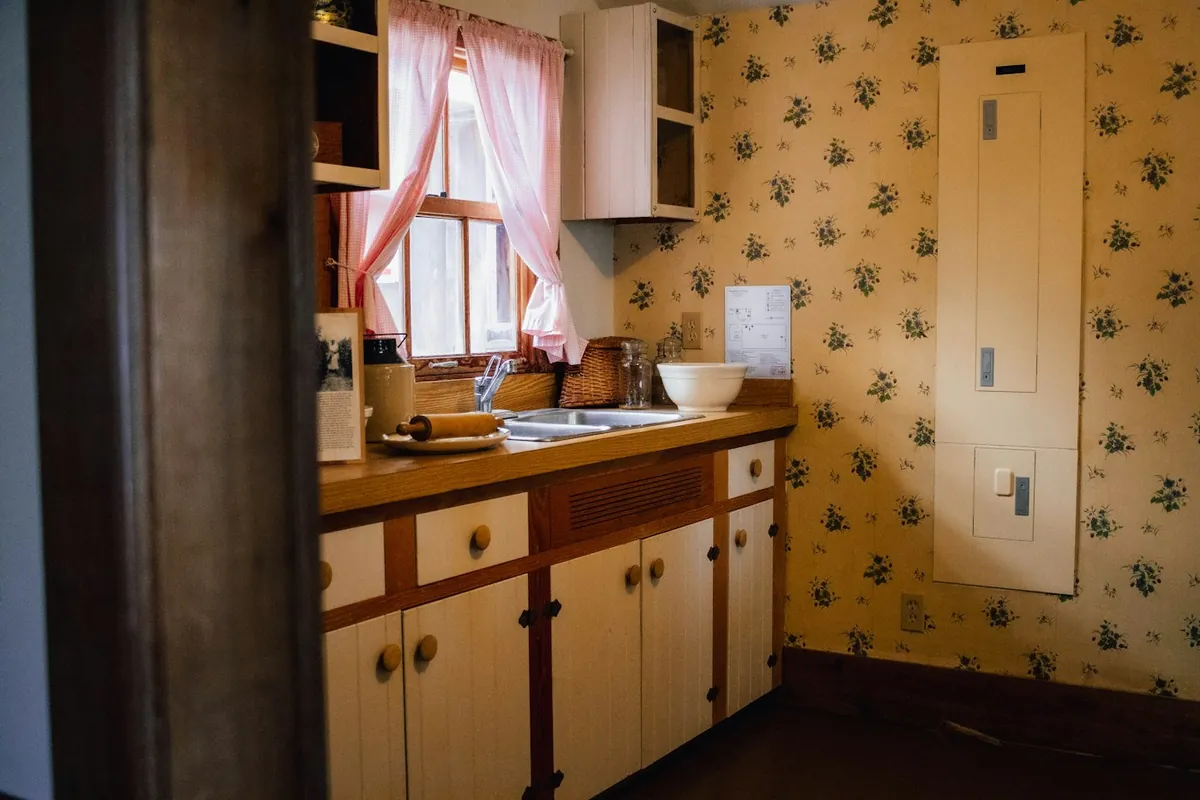
A Suburban Tract City Is Mostly a Pre-1978 City
Fountain Valley's consistency, which is the thing that makes it easy to work in, also means most of its housing sits on one side of the federal lead-paint boundary. A city of 57,047 people built largely in one suburban wave is not a mixed-era city, and that has a direct legal consequence for who is allowed to take an old kitchen out.
The Environmental Protection Agency states that in 1978 the federal government banned the sale of lead-based paint for use in homes, childcare facilities and preschools, and that approximately three-quarters of homes in the United States built before 1978 still contain some lead-based paint. Those homes are safe to live in while paint and surfaces are in good condition and kept clean; the hazard appears when painted surfaces are disturbed, because any renovation, repair or painting project in a pre-1978 home with lead-based paint can easily create dangerous lead dust.
The Renovation, Repair and Painting Rule therefore requires that anyone paid to perform work disturbing painted surfaces in such homes be certified, with employees trained either as a certified renovator or on the job by one. The EPA states this includes all firms, even sole proprietorships, and names general contractors and special trade contractors including painters, plumbers, carpenters and electricians. Its published list of covered activities is remodeling and repair or maintenance, electrical work, plumbing, painting preparation, carpentry, and window replacement.
The exemption most people rely on does not reach a kitchen strip-out. The EPA excludes minor repair and maintenance activities that disturb six square feet or less of paint per room inside, or 20 square feet or less outside, but attaches a note removing window replacement and demolition of painted surfaces from the exemption regardless of square footage. Pulling a painted kitchen off the walls is demolition of painted surfaces.
The rule's default position also runs opposite to how most homeowners assume. Paint testing is not required, but unless you have documentation that the paint is not lead-based, the requirements of the rule apply. Where testing is done it must cover all surfaces affected by the work, and each method is restricted: EPA-recognised test kits to certified renovators, X-ray fluorescence instruments to certified lead-based paint inspectors or risk assessors, and paint chip sampling to a certified renovator, inspector or risk assessor. California is not among the states authorised to run their own programme, so the EPA administers it here directly, and its National Lead Information Center answers questions on 1-800-424-5323.
The rule's exclusions are worth stating so the requirement is not overstated. Housing built in 1978 or later is outside it. So are zero-bedroom dwellings, and housing specifically for elderly or disabled persons, in both cases unless children under six live there or are expected to. So is any component declared lead-free by a certified inspector or risk assessor, or by a certified renovator using an EPA-recognised test kit or paint chip analysis.
Fountain Valley Costs, Worked Through
Because the stock repeats, run lengths repeat too, which makes Fountain Valley one of the easier cities on this list to budget for in advance. Here is the arithmetic using the published Los Angeles per-linear-foot band as the nearest printed benchmark to Orange County.
| Fountain Valley kitchen | Typical run | Low | High |
|---|---|---|---|
| Galley in a standard tract plan | 18 linear feet | $9,000 | $27,000 |
| L-shaped with a peninsula | 24 linear feet | $12,000 | $36,000 |
| Opened up to the family room, with an island | 34 linear feet | $17,000 | $51,000 |
Per-linear-foot band from a published Los Angeles cabinet maker's cost guide, read at source 30 September 2026. Run lengths are typical for the housing type rather than published figures. Countertops, appliances and any plumbing or electrical work are separate.
The same published guide tiers the market with a service life attached to each band, which is more useful than a single average: budget cabinetry at $75 to $150 per linear foot with a 5 to 10 year lifespan, semi-custom at $150 to $650 with 15 to 25 years, premium at $300 to $800 with 20 to 30 or more years, and luxury at $500 to $1,500 and up with 30 to 50 or more years. It also gives project totals of $7,500 to $22,500 at 15 linear feet, $12,500 to $37,500 at 25 feet and $17,500 to $52,500 at 35 feet, and describes Los Angeles pricing as about 25 percent above the national figure it quotes of $400 to $1,200 per linear foot.
A national published source gives the figures for the smaller interventions this city asks for most. A custom cabinet project typically runs $1,447 to $5,294 with most homeowners around $2,817, and the published extremes are $552 and $13,423. Installation of a cabinet box is about $100, a finished end is $100 to $200, crown moulding is about $70 per eight foot section, and removal of old cabinetry is around $300. Those are national figures and are labelled as such because no Fountain Valley equivalent is published.
For the box-keeping route, published Huntington Beach figures apply here as the nearest city-specific data: laminate refacing at $1,576 to $2,482 for a 12 cabinet kitchen, or $131 to $207 per cabinet; refinishing at $1,079 to $6,002 or about $4 to $10 per square foot; and painting at $1,060 to $5,899 with labour around $70 to $120 per hour. Given how often the boxes in this stock are square and dry, that route deserves a serious look before a full replacement is priced.
The Formaldehyde Numbers on Every Panel
California sets numerical formaldehyde emission ceilings on the composite wood panels inside cabinetry, and they differ by material, so the specification is partly an air-quality decision.
The California Green Building Standards Code requires hardwood plywood, particleboard and medium density fibreboard composite wood products used on the interior or exterior of a building to meet the formaldehyde requirements specified in the Air Resources Board's Air Toxics Control Measure for Composite Wood, at Title 17 of the California Code of Regulations section 93120 and following. Products not exempted must meet the printed limits, tested per ASTM E1333.
| Product | Current limit |
|---|---|
| Hardwood plywood, veneer core | 0.05 |
| Hardwood plywood, composite core | 0.05 |
| Particleboard | 0.09 |
| Medium density fibreboard | 0.11 |
| Thin medium density fibreboard, maximum 5/16 inch | 0.13 |
Limits from the California Green Building Standards Code, residential mandatory measures section 4.504.5, identical table printed at 5.504.4.5, read at source 30 September 2026.
What makes this actionable is the documentation list. The code accepts product certifications and specifications, chain of custody certifications, or product labelled and invoiced as meeting the Composite Wood Products regulation. For exterior grade material it also accepts marking to the PS-1 or PS-2 standards of the Engineered Wood Association, the Australian AS/NZS 2269 standard or European 636 3S. Separately, federal law under the Toxic Substances Control Act Title VI has required covered composite wood products to be labelled compliant by an EPA-recognised third-party certifier since 22 March 2019.
Note the interaction with the drawer conversions this city asks for. Drawer boxes and their bottoms are usually plywood and thin MDF respectively, which sit at the lowest and highest ends of that table, so a job made up mostly of drawers is a job where the labelling question is worth asking rather than skipping.
Certification: the One Independent Check
Ask whether the cabinetry carries ANSI/KCMA A161.1 certification. It is the only third-party performance standard in cabinetry a homeowner can verify, and in a city where a lot of work is drawer-heavy, the specific things it tests are the right things.
The Kitchen Cabinet Manufacturers Association describes A161.1 as covering rigorous tests of structural strength, drawer and door integrity, and finish durability. Drawer integrity is one of the three named categories, which matters here because the defining Fountain Valley request is more and better drawers. KCMA states that certified cabinets have passed 14 rigorous tests, including a 600-pound load test, to simulate a lifetime of use, and that between 40 and 50 percent of cabinets fail their first certification attempt. It also states that certified cabinets are available at every price point, from builder-grade units to high-end custom designs, and that it acts as a mediator to facilitate a resolution with the manufacturer if a homeowner has an issue with a certified cabinet.
Two further seals exist: the Environmental Stewardship Program, which certifies manufacturers adhering to sustainability practices, and the Severe Use Certification, which KCMA says was originally developed by the United States Department of Housing and Urban Development for the exceptionally high wear that apartment building kitchens often encounter.
What the Published Life Expectancy Figures Say
The carcass is the long-lived component and the countertop generally is not, which is worth knowing before deciding where a Fountain Valley budget goes.
| Component | Expected life |
|---|---|
| Closet shelves | A lifetime |
| Natural stone countertops | A lifetime |
| Garage and laundry cabinets | 100 or more years |
| Kitchen cabinets | Up to 50 years |
| Medicine cabinets | 20 or more years |
| Cultured marble countertops | About 20 years |
Source: NAHB and Bank of America Home Equity, Study of Life Expectancy of Home Components, February 2007, survey conducted summer 2006.
The study's own caveats matter. Many of the people interviewed emphasised that the life expectancy of housing components is greatly affected by the quality of maintenance, and noted that changing consumer preferences can result in products being replaced long before, or after, the end of their practical life expectancy. It also states that life expectancies depend on the quality of installation, the level of maintenance, weather and climate conditions, and the intensity of use.
For this city the reading is straightforward. A tract kitchen whose carcasses are sound is partway through a published 50 year expectancy, so the question is whether the complaint is about appearance, in which case the face is the answer, or about how the kitchen works, in which case new cabinetry drawn to the measured wall is.
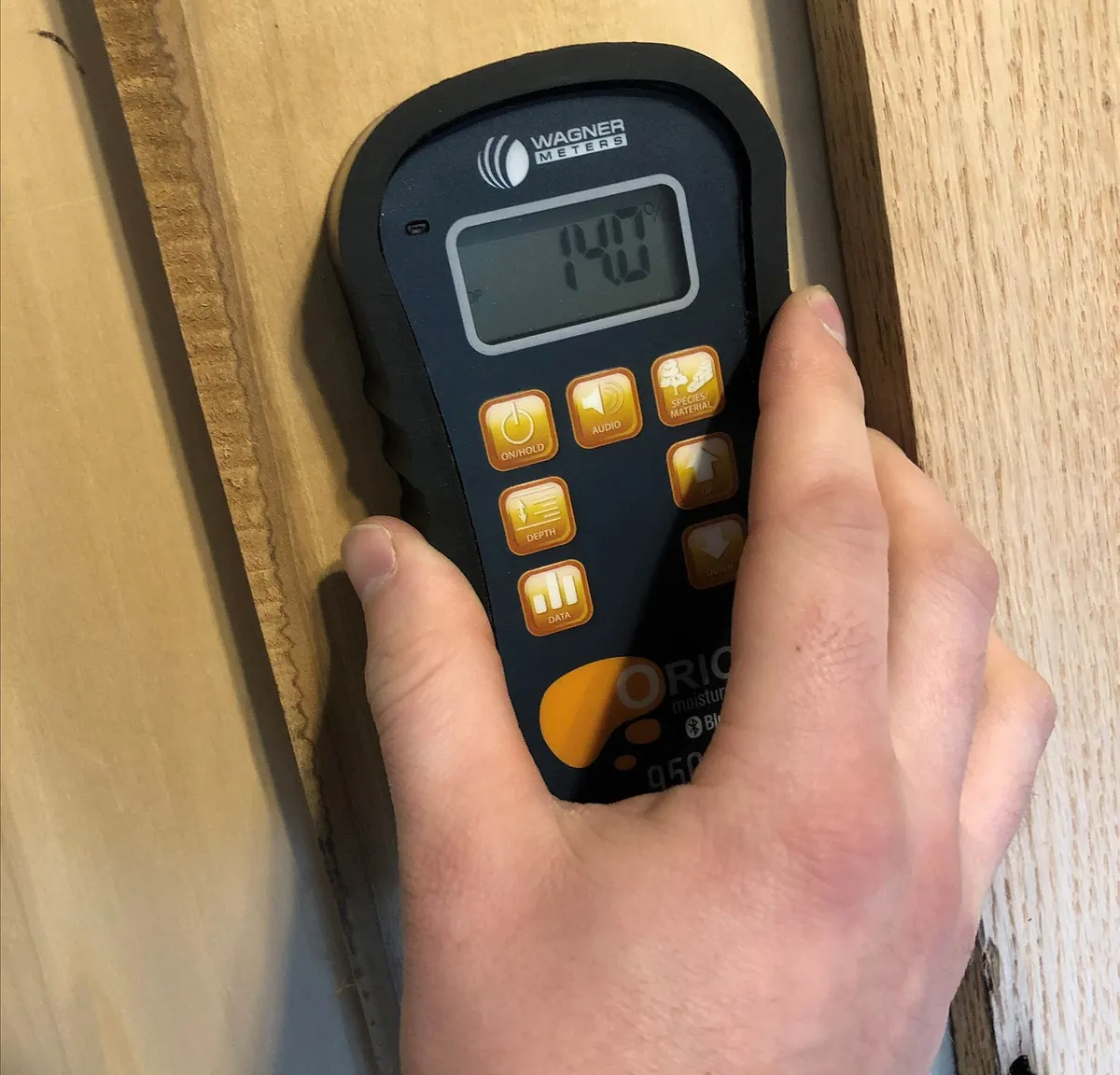
Wood Movement, and Why Fountain Valley Is the Mildest Case of the Six
Fountain Valley sits inland of Huntington Beach, on its north-east border, which makes it the least exposed of the six cities on this service list to the only thing the coast genuinely shortens, which is the life of plated hardware. For wood movement itself, the published figures are effectively identical to the coast, and they are unusually favourable.
The USDA Forest Service Forest Products Laboratory Wood Handbook tabulates equilibrium moisture content for outside conditions at United States stations, from average relative humidity and temperature data over 30 or more years of National Climatic Data Center records, averaging morning and afternoon values. The nearest listed station is Los Angeles, which runs 9.4, 10.2, 10.5, 10.4, 11.0, 11.7, 11.6, 11.2, 10.8, 10.6, 9.8 and 9.9 percent across the twelve months, a band of 2.3 percentage points with the wettest months in summer.
| Species | Tangential coefficient | Movement |
|---|---|---|
| Sugar pine | 0.00194 | 0.107 in |
| Black cherry | 0.00248 | 0.137 in |
| Douglas fir, coast type | 0.00267 | 0.147 in |
| Black walnut | 0.00274 | 0.151 in |
| Sugar maple | 0.00353 | 0.195 in |
| White oak | 0.00376 | 0.208 in |
| American beech | 0.00431 | 0.238 in |
Coefficients from Wood Handbook Table 13-5. Movement computed with the Handbook's own dimensional change equation, valid between 6 and 14 percent moisture content: 24 x coefficient x 2.3. The same sugar maple panel across Fresno's published 7.4 to 15.8 percent band moves 0.712 in.
The Handbook states the shop target that follows: hardwood and softwood lumber for furniture, cabinetry and millwork usually has a final moisture content of 6 to 8 percent and can be specified to be free of drying stresses, and the governing principle is to match the moisture content of lumber as closely as is practical to the equilibrium moisture content conditions in service. Because cabinetry arrives drier than the room here, it gains a little moisture and joints tighten, which is the direction you want.
One caveat the Handbook attaches itself is the practically useful one in this city. Its recommended interior values are based on measurements in well-ventilated buildings without unusual moisture sources and without air conditioning, and in air-conditioned buildings moisture conditions depend largely on proper sizing of the air-conditioning equipment. Inland Orange County runs air conditioning harder than the beach does, which nudges an interior slightly drier than the tabulated figures rather than wetter.
The Contract, the Licence and the Deposit Cap
These rules are state-level, so they read the same in Fountain Valley as anywhere in California, and they are the cheapest quality filter a homeowner has.
Business and Professions Code section 7048 exempts work from the licensing chapter only where the aggregate contract price for labour, materials and all other items is less than one thousand dollars, and only where the work does not require a building permit, describing that work as of casual, minor or inconsequential nature. Subdivision (b) voids the exemption where the work is part of a larger operation, or where a job has been split to evade the chapter, so breaking a kitchen into several sub-thousand-dollar contracts does not work. Subdivision (c) removes the exemption from anyone who advertises as if licensed.
The classification to ask for is C-6, Cabinet, Millwork and Finish Carpentry. The Contractors State License Board describes a C-6 contractor as one who makes cabinets, cases, sashes, doors, trims, nonbearing partitions and other items of finish carpentry by cutting, surfacing, joining, gluing and fabricating wood or other products to provide a functional surface. The board also publishes guidance on unlicensed contractors, which is worth five minutes before hiring anybody.
On money, section 7159 requires home improvement contracts over five hundred dollars to be in writing, and section 7159.5 caps the downpayment at one thousand dollars or 10 percent of the contract amount, whichever amount is less. The same section states that except for a downpayment, the contractor shall neither request nor accept payment that exceeds the value of the work performed or material delivered. On a $24,000 Fountain Valley kitchen, 10 percent would be $2,400, so the lower figure governs and the lawful maximum deposit is $1,000.
One provision catches people out. The three-day and five-day right to cancel notices required under section 7159 are not required where the contract is negotiated at the contractor's place of business, so a showroom signature carries no cooling-off window while the same contract signed at your kitchen table does.
- C-6 licence number in writing, checked on the CSLB Check a License page
- Written contract, since any home improvement contract over five hundred dollars must be
- Deposit no greater than one thousand dollars or 10 percent, whichever is less
- Progress payments tied to completed work rather than to dates
- EPA lead-safe firm certification confirmed if the house predates 1978
- Cabinetry invoiced as meeting the Composite Wood Products regulation
- Drawer runner brand and series named, given how drawer-heavy the work here tends to be
Cabinetry for Staying Put
A suburban city built in one wave tends to have long-tenure owners, and long-tenure owners eventually want a kitchen that works from a seated position or with less reaching. The published reference for that is the ADA Standards, and the number to design from is the forward reach range of 15 to 48 inches.
Those standards govern public accommodations rather than private houses, so nothing here is a legal requirement on a Fountain Valley kitchen. What they are is the most thoroughly tested set of dimensions anywhere for cabinetry operated from a seated position, which makes them the right reference to design against when the brief is about reach rather than about appearance.
The United States Access Board explains the scope in its guide. Operable parts are covered by section 205 and include light switches, electrical and communication receptacles, thermostats, alarm pulls, automatic door controls and other elements used by occupants. In a kitchen, that translates into every drawer pull, every door pull, the tap and the switches.
The precision that makes the standard usable is in section 308.2. The Board states that the range for unobstructed reaches, 15 inches to 48 inches, applies only to those portions of elements that are operable, and that non-operable portions can be located outside the range. That distinction changes how a drawer bank is drawn: a deep bottom drawer whose box starts low is fine provided its pull sits above 15 inches, which makes a small number of tall drawers more accessible than a large number of shallow ones.
Two further requirements apply where a reach passes over a counter. Section 309.2 requires that clear floor space for forward approaches extend up to, or where knee or toe space is provided, below the operable parts, so the reach does not extend beyond a wheelchair user's toes. And where the forward reach extends over an obstruction, the knee and toe space must be at least as deep as the reach depth measured from the leading edge of the obstruction, which means a deeper counter demands a deeper open recess underneath rather than simply removing a door. Where clear floor space is obstructed on both sides for more than half the minimum required depth, a wider clearance of 36 inches minimum is required for manoeuvring and sway.
| Element | Published figure | Design consequence |
|---|---|---|
| Unobstructed forward reach range | 15 in to 48 in | Every pull, tap and switch sits inside this band |
| Non-operable portions | May fall outside the range | Tall bottom drawers are fine if the pull is high enough |
| Knee and toe space depth | At least as deep as the reach depth from the leading edge | A deeper counter needs a deeper open recess, not just open doors |
| Clear floor space, obstructed both sides | 36 in minimum where obstruction exceeds half the required depth | Usually the binding constraint in a tract galley |
Source: United States Access Board, Guide to the ADA Accessibility Standards, Chapter 3: Operable Parts, read at source 30 September 2026, covering sections 205, 308.2 and 309.2. These standards apply to public accommodations; on a private home they are a design reference, not a requirement.
The Fountain Valley connection to the rest of this page is direct. A galley kitchen in a standard tract plan is the layout where the 36 inch clearance rule bites hardest, because a galley is obstructed on both sides by definition. And the drawer conversions this city asks for most are also the single most effective accessibility change available in an existing kitchen, because a drawer brings the contents of a cabinet out to the operator rather than requiring the operator to reach into the cabinet.
Nearby Cities on This Service Area
Fountain Valley sits between Huntington Beach and Westminster on this site's map. Everything around it is covered as normal work: Huntington Beach, Westminster, Costa Mesa, Newport Beach, Seal Beach and Sunset Beach.